
This post is to share about I2C & how it is used for communication. I2C is used in variety of application. In this example we’re going to use I2C EEPROM for demonstration.
Introduction to I2C
I2C is a very popular serial communication protocol which are used a lot in embedded devices. Hence, it is really useful to get familiarize with this protocol is this can be and important tool to “glance” into and “exploit” our target device.
Architecture
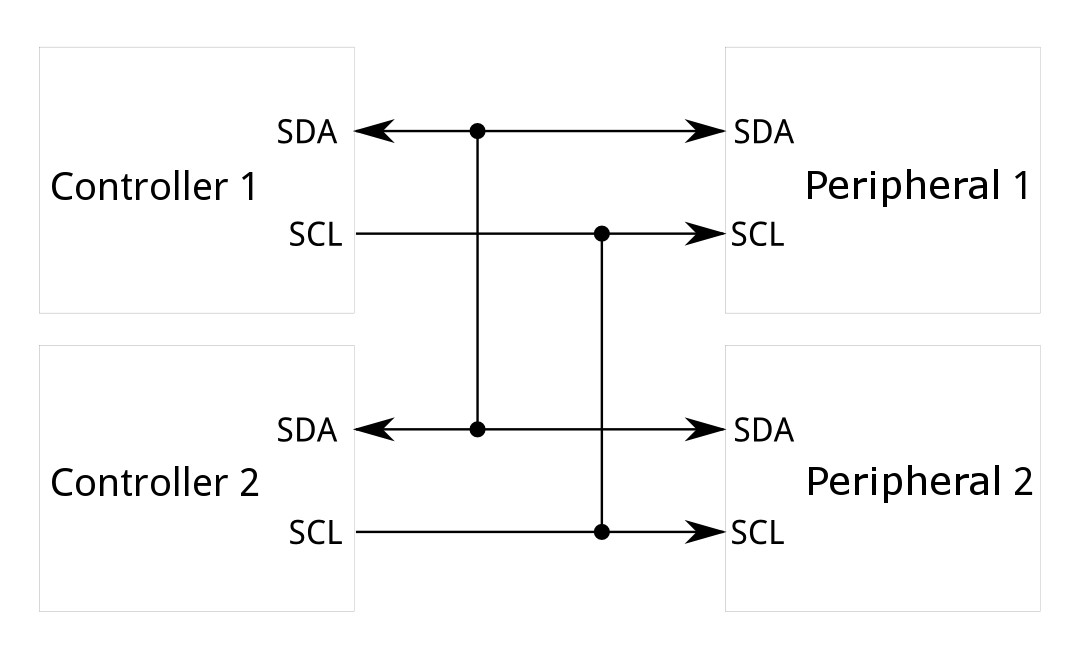
Similar to UART, I2c operates using only 2 wires to transmit data between devices: 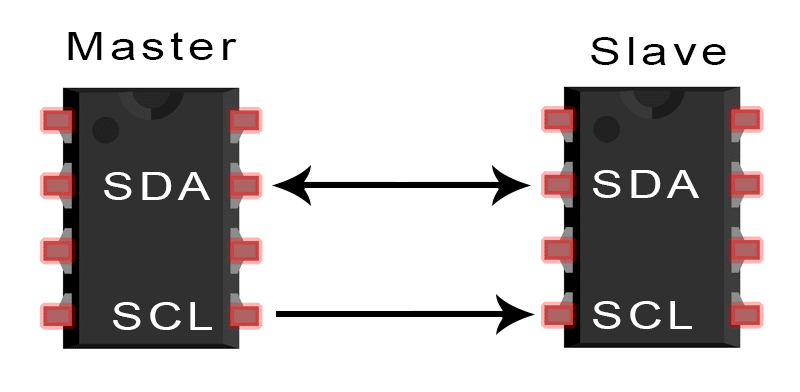
SDA - Serial Data : Transmit / receive data
SCL - Serial Clock : Carries clock signal
Inner Working
As I2C is a synchronous protocol, data is interpretated based on the sampling of Serial Data during the toggling of Serial Clock. Hence, it is necessary for both master & slave to operate on similar clock frequency.
Each I2C communication can be thought of as a stream of messages & each messages consist of multiple frames 8-bits each. Each messages starts with a Start condition, and terminated by a Stop condition 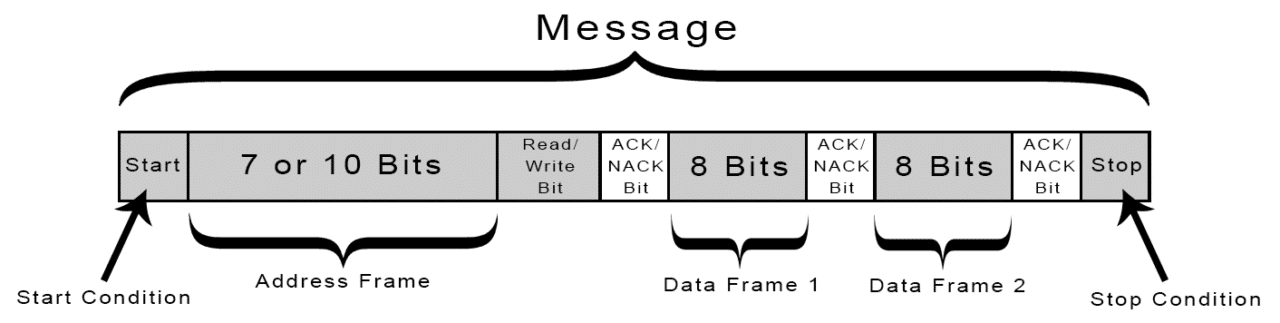
Start condition : Master pulls SDA low, while SCL is kept high
Stop condition : Master pulls SDA high, while SCL is kept high
Address frame : Unique address that identifies the slave intended for communication Read / Write bit: 0 - Write, 1 - Read
ACK / NACK bit : Each frame is followed by ACK/NACK to indicate success
Sniffing I2C
Described in this section is an exercice to sniff I2C courtesy of Practical Hardware Pentesting by Jean-Georges Valle